Our Work
Comprehensive programmes and strategic vision transforming Tanzania's energy landscape
- 4 Programmes
- 1M+ Lives Reached
- 32+ Years of Impact
Our Programmes
Comprehensive initiatives delivering real impact across Tanzania
Clean Cooking Programme
Transforming cooking practices across Tanzania's households and institutions
Programme Overview
Our flagship clean cooking programme promotes modern, efficient, and sustainable cooking solutions including electric pressure cookers (eCooking), improved woodfuel cookstoves, and sustainable charcoal production. The programme addresses health, environmental, and economic challenges associated with traditional cooking methods through community demonstrations, artisan capacity building, and market development.
Key Components
- eCooking Initiative: Distribution and promotion of electric pressure cookers (SESCOM EPC) for both household and institutional use, demonstrated to achieve significant energy cost reductions.
- Improved Cookstoves: Promotion of fuel-efficient improved woodfuel stoves for households, baking entrepreneurs, and institutions including schools and colleges.
- Sustainable Charcoal: Capacity building for charcoal producers on sustainable production methods to reduce deforestation.
- Stove Artisans & Entrepreneurs: Technical and business skills training for stove producers, baking entrepreneurs, and sales agents.
- Awareness & Demonstrations: Village-level and institutional demonstrations of clean cooking appliances across multiple regions.
Impact to Date
1M+
Households Using Improved Cookstoves
12,000+
Households Using Electric Cooking Appliances
Reduced
Indoor Air Pollution & Deforestation
Renewable Energy & Mini-Grid Programme
Expanding clean energy access through solar and community mini-grids
Programme Overview
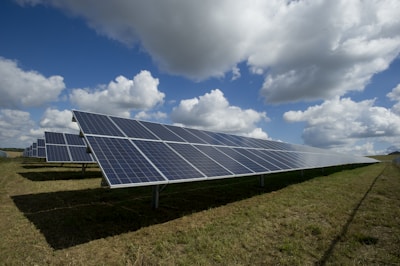
This programme focuses on increasing access to modern renewable energy in off-grid and under-served areas through solar home systems and SESCOM-developed mini-grid infrastructure. TaTEDO-SESO works with communities and private sector partners to deploy, manage, and maintain clean energy systems that power homes, schools, health centres, and productive enterprises.
Key Activities
- Development and management of solar mini-grids for off-grid communities
- Solar home system distribution and after-sales service support
- Electrification of schools and health facilities
- Productive use of renewable energy (solar drying, agro-processing, food vending)
- Training of mini-grid technicians and e-mobility technicians
- Operation and maintenance capacity building for local communities
Achievements
21
Villages Connected to Mini-Grids
SESCOM
Social Enterprise for Sustainable Energy
Multi-Region
Coverage Across Tanzania
Climate Change Mitigation & Environmental Conservation
Protecting Tanzania's environment through sustainable energy transition
Programme Overview
TaTEDO-SESO's climate programme integrates renewable energy deployment, sustainable forest management, and clean cooking promotion to reduce greenhouse gas emissions and build community resilience. The programme works at community, national, and international levels through lobbying, advocacy, and networking with partners including MPs and policy-makers to influence climate-relevant energy policies and decision-making.
Programme Elements
- Forest conservation through reduced deforestation via clean cooking adoption
- Sustainable charcoal production value chain development
- Reduction of indoor air pollution through transition to clean cooking appliances
- Climate adaptation strategies for energy-dependent communities
- Policy advocacy and dialogue with parliamentarians and sector ministries
- Engagement with international and regional climate and energy networks (INFORSE)

Community & Women Empowerment Programme
Building local capacity and economic opportunity through sustainable energy
Programme Overview
This programme empowers communities — particularly women — with knowledge, skills, and financial linkages to adopt and benefit from sustainable energy solutions. TaTEDO-SESO supports social enterprises and women's groups to generate income through energy-based productive activities including solar drying, food vending, baking, shops, kiosks, restaurants, hotels, schools, and colleges.
Key Interventions
- Technical and business skills training for energy entrepreneurs
- Women's group empowerment for productive use of energy technologies
- Support to stove artisans, baking entrepreneurs, and sales agents
- After-sales service networks for energy products and appliances
- Linkage of micro-enterprises and end-users with microfinance and startup grants
- Support to Tanzania Gender and Sustainable Energy Network (TANGSEN)
Results
1,400+
Women's Groups Empowered
Multi-Sector
Income-Generating Activities Supported
National
Reach Across Regions & Districts
Research, Policy & Enabling Environment
Evidence-based advocacy shaping Tanzania's sustainable energy landscape
Programme Overview
TaTEDO-SESO conducts participatory integrated energy assessments, research studies, and policy analysis to generate evidence that informs national and local energy planning. The organization engages stakeholders at national, regional, and international levels to foster supportive policies, investment incentives, and regulatory frameworks for sustainable energy services.
Key Activities
- Participatory integrated sustainable energy assessment and planning in urban and rural areas
- Socio-economic and cultural assessments of targeted end-user communities
- Advocacy for supportive policies, strategies, regulations, and tax incentives
- Dialogue with parliamentarians, decision-makers, and sectoral ministries
- Establishment and support of sector networks: TANGSEN, TAREA, CCAT, SEF, INFORSE
- Resource allocation advocacy and national planning priority engagement
Strategic Plan 2026-2031
Accelerating Tanzania's inclusive transition to sustainable energy services
Vision
A country where all have access to sustainable energy services while conserving the environment, creating wealth, and combating climate change.
Mission
To facilitate and empower stakeholders to unlock barriers along the sustainable energy value chain by providing support services and fostering an enabling environment for enhanced access to sustainable energy services for environmental conservation, wealth creation, and climate change mitigation and adaptation.
Core Values
Seven Strategic Pillars
Our work for 2026-2031 is organized around seven strategic pillars, each representing a domain of high-priority, high-impact activity in an integrated, outcome-oriented architecture.
Modern Energy Cooking Services (MECS) & Clean Cooking
Scaling electric and clean cooking adoption across households, institutions and enterprises, including EPC market development, institutional cooking, biomass transition and on-bill financing.
Sustainable Energy Enterprises & Market Development
Strengthening the social enterprise ecosystem (SESCOM, SEECO, FRUKICO) for commercial sustainability, SME incubation, market systems and investment readiness.
Climate Finance, Carbon Markets & Digital MRV
Accessing and generating climate finance through carbon credits, results-based financing and digital MRV using IoT sensors, smart meters and AI analytics.
Renewable Energy & Productive Use Systems
Expanding renewable electricity for productive economic use, including mini-grids, solar home systems, agro-processing, rural enterprise energy and electric mobility (E3W).
Policy, Research, Advocacy & Knowledge Leadership
Consolidating our role as a national policy actor and regional learning hub through evidence generation, advocacy, energy statistics and academic partnerships.
Digital Innovation & Smart Energy Systems
Becoming a data-driven organization via the Digital eCooking Intelligence Platform, IoT device management, PAYG financing, GIS analytics and utility integration.
Institutional Sustainability & Resource Mobilization
Ensuring long-term financial health through diversified revenue, governance strengthening, talent development and a new institutional endowment fund.
Results Framework & Targets
Measurable outcomes and key targets for each strategic pillar by 2031.
Strategic Map
The seven strategic pillars deliver against five prioritized strategic objectives across the organization's environment:
Improved Livelihoods
Market Transformation
Climate Action
Policy Influence
Financial Sustainability
Implementation Roadmap
2026-2028
- Launch the Digital eCooking Intelligence Platform with an initial 1,000 connected EPC users in Dar es Salaam
- Strengthen the social enterprise ecosystem through a governance upgrade and investment-readiness package
- Register the first carbon credit programme for clean cooking emissions reductions
- Pilot TANESCO on-bill financing, launch the GESI Action Plan and establish the Institutional Sustainability Special Fund
2028-2029
- Scale the Digital eCooking Intelligence Platform to 50,000 connected users nationally
- Reach social enterprise commercial breakeven and generate first certified carbon credits
- Expand institutional cooking to at least 200 schools, hospitals and hotels
- Establish the regional learning hub and operationalize the agro-processing line
2029-2031
- Be recognized as Tanzania's leading market transformation institution for clean cooking
- Reach 50% internally generated revenue with an established, operational endowment fund
- Grow the digital platform to 100,000+ eCooking users with full IoT and carbon MRV
- Build joint-venture energy investments and serve as a national training and innovation hub
Our Impact
Measurable results from over three decades of sustainable energy work
Environmental Conservation
Increased adoption of clean cooking solutions has directly contributed to the conservation of forests through reduced deforestation. Fewer households relying on wood and charcoal means fewer trees felled and healthier ecosystems across Tanzania.
- Reduced deforestation in programme areas
- Lower greenhouse gas emissions from cooking
- Sustainable charcoal production chains developed
Health & Quality of Life
Households transitioning to electric and improved cookstoves experience significantly reduced indoor air pollution — one of the leading causes of respiratory illness for women and children in Tanzania.
- Reduced indoor air pollution for 12,000+ households
- Less time spent collecting firewood
- Improved safety in cooking environments
Economic Empowerment
Sustainable energy technologies have generated income for women's groups and individuals engaged in solar drying, food vending, baking, shops, kiosks, restaurants, hotels, schools, and colleges.
- Income generated for 1,400+ women's groups
- Energy cost savings for households and businesses
- New enterprises created along energy value chains
Sector Networks & Organizations Established
TaTEDO-SESO has played a key role in establishing several organizations that now shape Tanzania's sustainable energy ecosystem:
Tanzania Gender & Sustainable Energy Network
Tanzania Renewable Energy Association
Clean Cooking Alliance of Tanzania
International Network for Sustainable Energy
Our Approach
How we work with communities and partners to unlock sustainable energy access
Sustainable Energy Value Chain
We study and identify actors along the entire sustainable energy value chain, assess barriers facing each actor, and develop targeted interventions including innovations, distribution channels, and stakeholder networks.
- Map actors from production to end-use
- Identify and address supply and demand barriers
- Develop market chain innovations and channels
- Strengthen distribution networks
Support Services
We identify and ensure the provision of support services to increase and scale up access to energy services — from startup grants and microfinance to technical training and awareness campaigns.
- Capacity development through demonstrations and training
- Awareness information management and dissemination
- Startup grants and microfinance linkages
- After-sales service networks for energy products
Enabling Environment
We advocate for sustainable energy supportive policies on investment, financing, licensing, and regulations — and lobby for incentives that make energy services accessible and affordable for end-users.
- Policy advocacy at national and local levels
- Dialogue with MPs and decision-makers
- Tax incentives and subsidy advocacy
- International and regional network engagement

Participatory Community Methods
TaTEDO-SESO uses participatory approaches at the heart of all its interventions. Before any programme is designed, we undertake social, economic, and cultural assessments of targeted communities to understand the level of awareness, skills, willingness, and ability to pay for energy services.
This participatory planning ensures that energy solutions are context-appropriate, accepted by communities, and financially viable for the households and entrepreneurs they serve.
End-users and energy entrepreneurs are also linked with financial opportunities for investment and working capital, ensuring that energy access translates into lasting economic change.
Who We Work With
Stove Artisans
Baking Entrepreneurs
Sales Agents
After-Sales Technicians
Mini-Grid Technicians
E-Mobility Technicians
Women's Groups
Rural Households
Institutions & Schools
Government & MPs
Development Partners
Charcoal Producers